

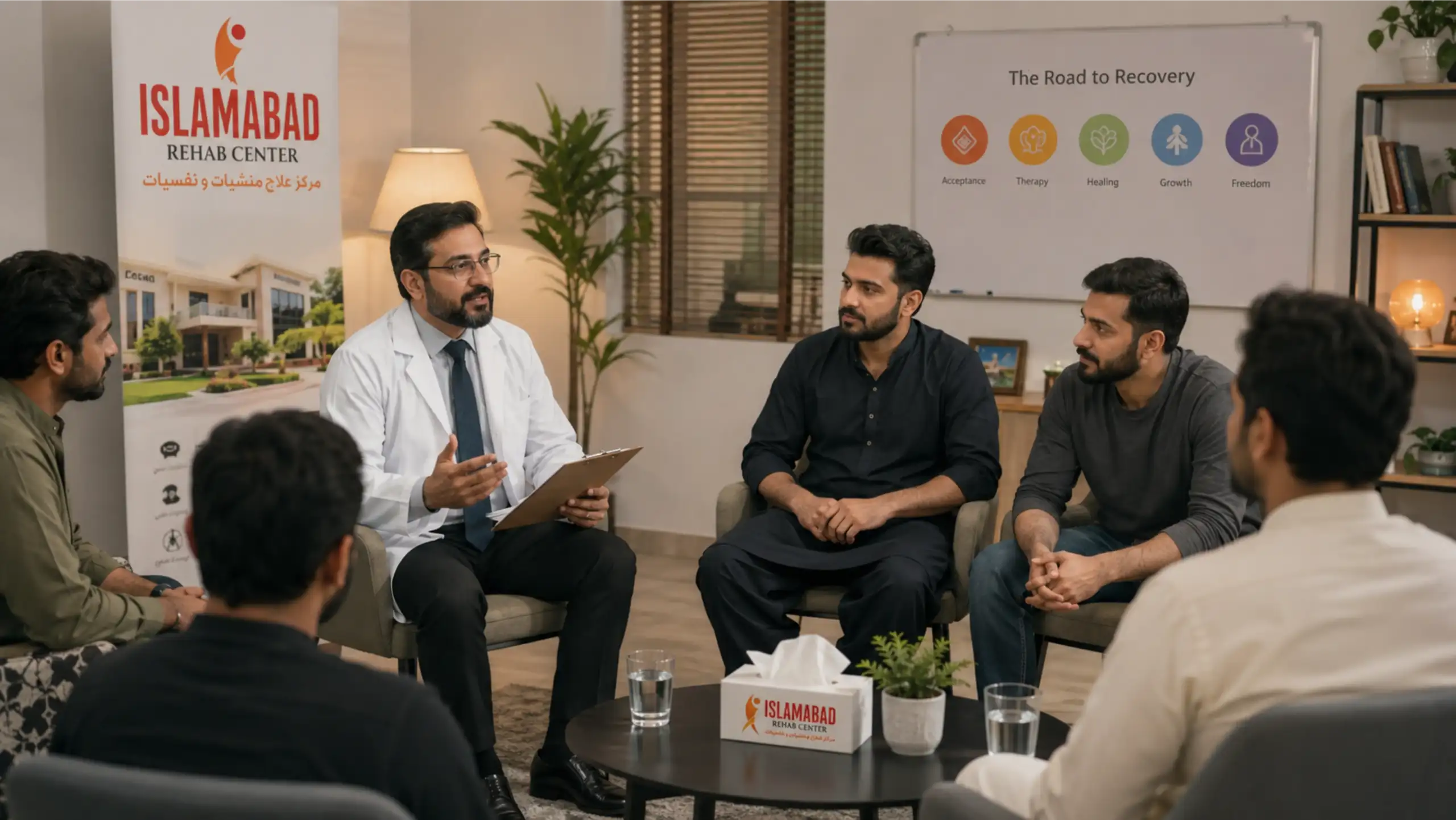
Addiction Therapy in Islamabad
Addiction can affect a person’s health, emotions, behaviour, relationships, education, employment and ability to manage everyday responsibilities. Although stopping alcohol or drug use is an important goal, sustainable recovery often requires more than physical abstinence. People may also need professional support to understand why substance use developed, recognise triggers, manage cravings and build healthier ways of coping.
Addiction therapy in Islamabad provides structured psychological and behavioural support for people experiencing drug addiction, alcohol dependence or other substance-use problems. At Islamabad Rehab Centre, therapy is planned around the individual’s condition, substance-use history, mental health, family circumstances and recovery needs.
Treatment may include individual counselling, cognitive behavioural therapy, motivational approaches, group sessions, family therapy, relapse-prevention planning and psychiatric support where appropriate. Therapy may be delivered through an inpatient rehabilitation programme or an outpatient treatment plan, depending on clinical assessment and safety considerations.
Addiction is a treatable health condition rather than a moral failure or lack of willpower. International treatment standards recommend evidence-based, ethical and individualised care that addresses medical, psychological and social needs. Therapy helps patients move beyond short-term abstinence and develop the insight, skills and support needed for long-term recovery.
Table of Contents
- What Is Addiction Therapy?
- Who May Need Addiction Therapy?
- Signs That Professional Help May Be Needed
- How Addiction Therapy Works
- Types of Addiction Therapy
- Medical Detox and Psychological Therapy
- Dual Diagnosis Treatment
- Inpatient and Outpatient Therapy
- Family Support During Recovery
- Relapse Prevention and Aftercare
- Benefits of Addiction Therapy
- Our Addiction Therapy Process
- Why Choose Islamabad Rehab Centre?
- Frequently Asked Questions
- Start Addiction Therapy in Islamabad


What Is Addiction Therapy?
Addiction therapy is a structured form of psychological treatment for people whose use of alcohol, illicit drugs or prescription medicines is causing physical, emotional, behavioural or social harm.
Its purpose is not simply to tell someone to stop using substances. Effective therapy examines the thoughts, emotions, environments, relationships and habits connected with substance use. It then helps the patient develop healthier responses to stress, cravings, conflict, trauma, loneliness and other triggers.
Substance-use disorders can affect motivation, decision-making, emotional regulation and behaviour. Repeated substance use may also reinforce patterns that make it difficult to stop despite serious consequences. Evidence-based behavioural therapies help patients change drug-related attitudes and behaviours while learning practical coping and recovery skills.
What Addiction Therapy Addresses
A personalised therapy programme may address:
- Loss of control over alcohol or drug use
- Cravings and compulsive substance-seeking
- Denial or low motivation for treatment
- Emotional distress and poor coping skills
- Anxiety, depression or trauma symptoms
- Family conflict and damaged trust
- Employment, study or financial problems
- Social isolation and unhealthy relationships
- High-risk situations and relapse patterns
- Low confidence about living without substances
Therapy is most effective when it considers the whole person rather than focusing only on the substance being used.
Who May Need Addiction Therapy?
Addiction therapy may benefit anyone whose substance use has become difficult to control or is creating harm. A person does not need to “lose everything” before seeking professional support.
Early treatment may prevent further deterioration in physical health, mental health, family relationships and social functioning.
People Who May Benefit
Professional assessment should be considered when a person:
- Uses more alcohol or drugs than intended
- Has repeatedly tried and failed to stop
- Experiences strong cravings
- Neglects work, education or family duties
- Continues using despite health consequences
- Becomes secretive, irritable or socially withdrawn
- Needs increasing amounts to achieve the same effect
- Experiences withdrawal symptoms after reducing use
- Uses substances to manage stress or emotional pain
- Returns to substance use after previous treatment
- Experiences depression, anxiety, paranoia or mood changes
- Engages in unsafe, aggressive or impulsive behaviour
Family members frequently recognise these changes before the individual accepts that treatment is needed. A confidential consultation can help determine whether addiction counselling, medical detox, inpatient rehabilitation, outpatient care or psychiatric assessment is appropriate.
Signs That Professional Help May Be Needed
Substance-use problems can appear differently from one person to another. Some individuals remain employed or socially active while experiencing significant dependence in private. Others experience a rapid decline in health and functioning.
Physical Signs
Possible physical indicators include:
- Changes in sleep or appetite
- Unexplained weight loss or weight gain
- Tremors, sweating or restlessness
- Poor coordination or slurred speech
- Frequent illness or reduced self-care
- Bloodshot eyes or unusual pupil size
- Withdrawal symptoms between periods of use
- Increasing tolerance to a substance
Psychological and Behavioural Signs
A person may also experience:
- Intense cravings
- Irritability or aggression
- Anxiety, low mood or emotional instability
- Difficulty concentrating
- Suspiciousness or paranoia
- Loss of interest in previous activities
- Lying about substance use
- Borrowing or stealing money
- Unexplained absences
- Risky driving or unsafe behaviour
These signs do not confirm a diagnosis on their own. A qualified clinician should evaluate symptoms, substance-use history, physical health, mental health and immediate safety risks.
How Addiction Therapy Works
Addiction therapy begins with assessment rather than assumptions. The therapist or clinical team explores what substances are being used, how often they are used, what consequences have developed and what factors maintain the pattern.
Treatment then focuses on achievable recovery goals.
Understanding Triggers
Triggers are internal or external experiences that increase the desire to use a substance. They may include:
- Stress or conflict
- Certain friends or locations
- Access to money
- Loneliness or boredom
- Trauma reminders
- Celebrations and social pressure
- Sleep difficulties
- Anxiety or depression
- Exposure to drugs or alcohol
Patients learn to identify triggers before they escalate into high-risk decisions.
Changing Thoughts and Behaviours
Therapy helps patients recognise thoughts that may encourage substance use, such as:
- “I cannot manage stress without drugs.”
- “One drink will not cause a problem.”
- “Recovery has already failed because I slipped.”
- “Nobody understands what I am experiencing.”
The therapist helps the patient examine these thoughts and replace them with safer, realistic responses.
Building Recovery Skills
Patients may practise:
- Craving-management techniques
- Emotional regulation
- Problem-solving
- Assertive communication
- Stress management
- Refusal skills
- Healthy routines
- Conflict resolution
- Relapse-response planning
Recovery skills become stronger through practice, professional guidance and support from family or peers.
Types of Addiction Therapy
No single therapy method is appropriate for every patient. Treatment should be matched to the person’s diagnosis, motivation, risks, age, mental health and recovery environment.
Cognitive Behavioural Therapy
Cognitive behavioural therapy, commonly called CBT, helps people identify links between thoughts, emotions and behaviours. In addiction treatment, CBT may help patients recognise high-risk situations, challenge unhelpful beliefs and develop alternative coping strategies.
For example, a person who uses drugs after family conflict may learn to notice rising anger, leave the immediate situation safely, contact a support person and use relaxation techniques instead of returning to substance use.
NIDA identifies CBT as an established behavioural approach that helps people recognise, avoid and cope with situations in which they are most likely to use drugs.
Motivational Enhancement
Some patients enter treatment feeling uncertain, pressured or resistant. Motivational approaches help them explore the difference between their current behaviour and their personal goals.
Rather than confronting or shaming the patient, the therapist encourages honest discussion about:
- Reasons for continuing substance use
- Reasons for wanting change
- Personal values
- Health and family consequences
- Confidence in recovery
- Practical next steps
This approach can strengthen a person’s readiness to participate in treatment.
Individual Addiction Counselling
Individual sessions provide a confidential setting in which the patient can discuss personal experiences, cravings, relationships, trauma, shame or setbacks.
Individual counselling can be especially useful when sensitive issues are difficult to discuss in a group. Sessions may also focus on treatment goals, progress, relapse risks and plans for returning to family, work or education.
Group Therapy for Addiction
Professionally facilitated group therapy allows patients to learn from others facing similar challenges. It can reduce isolation, improve accountability and provide opportunities to practise communication and problem-solving.
Group treatment should be structured, confidential and led by trained professionals. SAMHSA clinical guidance describes group therapy as an established component of substance-use treatment when patients are appropriately assessed and placed.
Family Therapy
Addiction often affects the entire family. Relatives may experience fear, anger, guilt, financial stress or loss of trust. Some families become caught in repeated cycles of conflict, rescue, secrecy and relapse.
Family therapy can help participants:
- Understand addiction as a health condition
- Improve communication
- Establish healthy boundaries
- Reduce enabling behaviours
- Prepare for the patient’s return home
- Recognise warning signs
- Support recovery without controlling the patient
Family involvement should respect patient confidentiality, consent, safety and clinical judgement. Family therapy focuses on relationships and communication patterns that may influence treatment and recovery.
Medical Detox and Psychological Therapy
Medical detox and addiction therapy have different but complementary purposes.
Detoxification helps manage the physical effects of stopping or reducing a substance. Therapy addresses the psychological, behavioural and social factors connected with addiction.
A patient with significant alcohol, sedative or opioid dependence may require medical assessment before abruptly stopping use. Withdrawal can sometimes cause serious complications. Medical detox should therefore be planned and supervised according to the substance used, severity of dependence, physical health and previous withdrawal history.
Detox alone does not usually resolve the thoughts, habits and circumstances that contributed to addiction. Psychological therapy should continue after physical withdrawal has stabilised.
Where clinically appropriate, treatment may combine behavioural therapy with medication. Research-based guidance recognises that medication, counselling and behavioural therapies may be used together for certain substance-use disorders.

Dual Diagnosis Addiction Therapy
Dual diagnosis refers to the presence of a substance-use disorder alongside another mental health condition.
Common co-occurring concerns may include:
- Depression
- Anxiety disorders
- Post-traumatic stress symptoms
- Bipolar disorder
- Psychotic symptoms
- Personality-related difficulties
- Attention or impulse-control problems
- Sleep disorders
Mental health symptoms may contribute to substance use, result from substance use or become worse during intoxication and withdrawal. A comprehensive assessment is necessary to understand these relationships.
Integrated treatment may involve an addiction therapist, psychiatrist, clinical psychologist, medical doctor and other professionals. Treating only the addiction while overlooking significant psychiatric symptoms can leave important relapse risks unresolved.
Inpatient and Outpatient Addiction Therapy
The appropriate treatment setting depends on clinical need rather than personal preference alone.
Inpatient Addiction Therapy
Inpatient rehabilitation provides a structured residential environment. It may be appropriate when a patient:
- Cannot remain safe or abstinent at home
- Has severe or long-term substance dependence
- Has experienced repeated relapse
- Requires close observation
- Has significant psychiatric symptoms
- Lives in an unstable or high-risk environment
- Needs separation from substances and harmful influences
Inpatient programmes can combine daily structure, medical oversight, individual therapy, group counselling, family involvement and recovery planning.
Outpatient Addiction Therapy
Outpatient treatment allows patients to attend scheduled appointments while continuing to live at home. It may suit people who are medically stable, have manageable risks and possess reliable support.
Outpatient care can include:
- Individual counselling
- Psychiatric follow-up
- Group sessions
- Family therapy
- Medication review
- Drug screening where clinically appropriate
- Relapse-prevention planning
- Recovery monitoring
The level of care may change as the patient’s condition improves or new risks emerge.
Family Support During Recovery
Families cannot force long-term recovery, but their response can influence treatment engagement and the home environment.
Relatives should avoid humiliation, threats, physical confrontation or giving money without boundaries. They can instead encourage a professional assessment, communicate concerns calmly and seek guidance about responding to crises.
Families may be advised to:
- Learn about addiction and recovery
- Avoid covering up harmful consequences
- Set clear, realistic boundaries
- Remove alcohol or drugs from the home
- Attend agreed family sessions
- Support treatment appointments
- Watch for relapse warning signs
- Protect children and vulnerable relatives
- Seek help for their own stress
Families also need support. Recovery should not require relatives to ignore their own safety, health or emotional wellbeing.
Relapse Prevention and Aftercare
Recovery is an ongoing process. Completing detox or residential rehabilitation does not remove every future trigger.
Relapse-prevention therapy helps patients recognise early warning signs and act before substance use resumes.
Common Warning Signs
Warning signs may include:
- Missing therapy appointments
- Reconnecting with substance-using contacts
- Romanticising previous drug or alcohol use
- Increased secrecy
- Poor sleep and irregular routines
- Isolation
- Unmanaged anger or depression
- Stopping prescribed treatment without review
- Believing that occasional use is now safe
A Personalised Prevention Plan
An aftercare plan may identify:
- Personal triggers
- Emergency contacts
- Coping strategies
- Follow-up appointments
- Family responsibilities
- Medication arrangements
- Safe housing needs
- Work or study goals
- Peer or community support
- Steps to take after a lapse
A lapse should be treated seriously, but it does not have to become a complete return to uncontrolled substance use. Prompt contact with the treatment team allows risks to be reassessed and the recovery plan to be strengthened.
Benefits of Addiction Therapy
The benefits of therapy develop gradually and vary between individuals. Treatment cannot guarantee that a person will never experience cravings or relapse. However, consistent participation can improve the skills and support needed to manage recovery.
Potential benefits include:
- Better understanding of addiction patterns
- Improved control over high-risk behaviour
- Stronger craving-management skills
- Healthier emotional coping
- Reduced secrecy and isolation
- Improved family communication
- Better treatment engagement
- Increased motivation for recovery
- Greater awareness of mental health needs
- A structured relapse-prevention plan
- Support for rebuilding work, study and daily routines
- Improved confidence in life without substances
The long-term objective is not simply to stop a substance. It is to help the individual develop a safer, healthier and more purposeful life.
Our Addiction Therapy Process
1. Confidential Initial Consultation
The first conversation explores the patient’s immediate concerns, current substance use, treatment history and possible risks. Families may also seek initial guidance when the patient is unwilling or unable to make contact personally.
2. Clinical Assessment
Assessment may cover:
- Substances being used
- Duration and frequency of use
- Withdrawal risks
- Physical health
- Mental health symptoms
- Current medications
- Previous treatment and relapse
- Family and living situation
- Safety concerns
- Readiness for change
3. Personalised Treatment Planning
The clinical team determines whether the patient may benefit from medical detox, inpatient rehabilitation, outpatient therapy, psychiatric care, family sessions or a combination of services.
4. Active Therapy
Treatment may include individual counselling, CBT-informed interventions, motivational work, group therapy, recovery education and family support.
5. Progress Reviews
Recovery plans should be reviewed as the patient’s needs change. Clinicians may adjust the intensity, goals or type of treatment based on participation, symptoms, risk and progress.
6. Discharge and Aftercare Planning
Before completing a structured programme, the patient should have a clear plan for follow-up care, triggers, emergency support, family involvement and relapse prevention.

Why Choose Islamabad Rehab Centre?
Islamabad Rehab Centre provides addiction therapy for individuals and families seeking professional support in Islamabad, Rawalpindi, PWD and nearby areas.
Our patient-focused approach emphasises:
- Confidential and respectful care
- Individualised treatment planning
- Medical and psychological assessment
- Evidence-based therapeutic approaches
- Support for drug and alcohol problems
- Dual diagnosis assessment
- Family education and counselling
- Inpatient and outpatient options
- Relapse-prevention planning
- Structured aftercare recommendations
Treatment decisions are based on clinical assessment. Patients and families receive clear guidance about the proposed level of care, therapy objectives and next steps.
Frequently Asked Questions
Where can I find a rehab centre near me in Islamabad?
How much does a rehabilitation centre cost in Pakistan?
What is included in rehab centre services?
How long does addiction rehabilitation take?
Can families visit patients during rehabilitation?
How do I choose the best rehabilitation centre in Islamabad?
Start Addiction Therapy in Islamabad
You do not have to wait for addiction to create another medical, emotional or family crisis.
A confidential assessment can help clarify what is happening, whether withdrawal may be dangerous and which level of treatment is most appropriate. Islamabad Rehab Centre provides addiction therapy in Islamabad for people affected by drug use, alcohol dependence, repeated relapse and co-occurring mental health concerns.
Call Islamabad Rehab Centre, book a consultation with the clinical team or visit the centre to discuss the next safe step towards recovery.
This page provides general educational information and does not replace personalised medical advice, diagnosis or emergency care.